
Off-Grid Solar Inverters & Kits: A Buying Guide for Cabins, RVs and Home Backup
Disclosure: This article may contain affiliate links. If you buy through them, we may earn a small commission at no extra cost to you. It never changes what we recommend. Learn more.
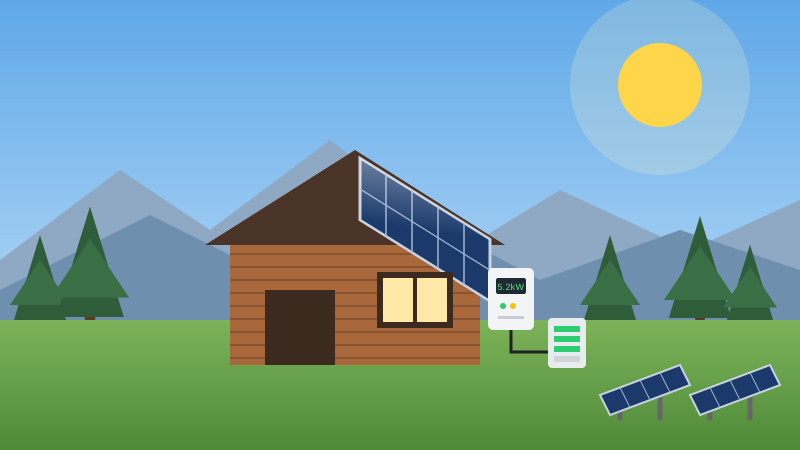
More and more American homeowners, cabin owners and RV travellers are building their own solar systems – to cut power bills, to stay powered during outages, or to live fully off the grid. The inverter is the heart of any of these systems, and choosing the wrong size or voltage is the most common (and most expensive) mistake. This guide explains the key decisions in plain English, using models from SunGoldPower, a California-based solar brand that sells inverters, batteries, panels and complete kits, as practical examples.
We have not installed these systems ourselves. This guide is based on manufacturer specifications, retailer listings and published customer feedback. Solar wiring involves high voltages, so always follow the manual and local electrical codes, and use a licensed electrician for anything connected to your home's main panel.
Step 1: Decide what kind of system you need
Off-grid
The system is not connected to the utility at all. Solar panels charge a battery bank, and the inverter turns battery power into normal household AC power. This suits remote cabins, tiny homes, farms and RVs. An off-grid "all-in-one" inverter usually combines the inverter, an MPPT solar charge controller and a battery charger in one box.
Hybrid (grid-tied with battery backup)
The system stays connected to the grid, uses solar first, stores extra energy in batteries and keeps essential loads running during an outage. Hybrid inverters need extra certifications so utilities allow them to connect. This is the usual choice for homes in areas with storms or frequent blackouts.
Mobile / small backup
For an RV, van, boat or workshop, a smaller 12V or 24V inverter-charger in the 2,000–4,000 W range is often enough.
Step 2: Size the inverter correctly
An inverter has two power ratings:
- Rated (continuous) power – what it can supply all day, for example 5,000 W or 10,000 W.
- Peak (surge) power – a short burst for starting motors such as well pumps, fridges, air conditioners and power tools. Motors can need several times their running power for a moment.
Add up the appliances you want to run at the same time, then leave a margin of at least 20–25%. As a rough guide: a small cabin with lights, a fridge, a laptop and a TV may be fine with 3,000–5,000 W; a full-time off-grid home with a well pump, washer and some air conditioning usually needs 8,000–12,000 W or more.
Step 3: Understand battery voltage – 12V, 24V or 48V
Higher battery voltage means lower current for the same power, which allows thinner cables, less heat and better efficiency. In practice:
- 12V – common in RVs and vans, best for small systems.
- 24V – a good middle ground for cabins and medium systems around 3,000 W.
- 48V – the standard for home-sized systems of 5,000 W and up.
Your battery bank must match the inverter's DC voltage, so decide this before buying batteries.
Step 4: 120V or split phase 120/240V?
Most US homes use split phase power: 120V for normal outlets and 240V for large appliances such as well pumps, electric dryers, ranges and central AC. If you need 240V loads, choose a split phase inverter rated for 120/240V output. A 120V-only inverter is simpler and fine for RVs and small cabins that only have standard outlets.
Step 5: Check solar input limits
Look at the inverter's maximum PV input power (how many watts of panels it can take) and maximum PV voltage (how many panels you can wire in series). Exceeding the voltage limit, especially on cold mornings when panel voltage rises, can damage the inverter. Higher PV voltage limits make wiring longer strings of panels easier.
Step 6: Look for real certifications
For the US market, UL 1741 is the key safety listing for inverters, and grid-connected hybrid inverters usually also need IEEE 1547 and UL 1741 SB compliance so the utility will approve them. For lithium batteries, look for UL 1973 and UL 9540A. Many local inspectors and insurers will ask about these.
SunGoldPower models as examples
SunGoldPower has sold solar products since 2014 and lists US-based technical support, free shipping and a 30-day return policy on its official store. Its range is designed for the North American grid. A few representative products from its catalogue:
3,000 W 24V Solar Inverter Charger (SPH302480A)
A pure sine wave inverter-charger with 120V AC output and a peak rating of 6,000 VA, aimed at cabins, RVs and emergency backup. A sensible entry point for smaller systems running on a 24V battery bank.
5,000 W and 6.5 kW 48V inverters
The 5,000 W 48V solar charger inverter (120V output) and the 6.5 kW 48V split phase model (SPH6548P) step up to small-home size. The split phase version gives 120/240V for homes with 240V appliances.
10 kW 48V Split Phase Solar Inverter (SPH10048P)
An all-in-one off-grid unit rated at 10,000 W continuous and 20,000 W peak, with 120/240V split phase output, a listed motor load capacity of 6 HP, and UL 1741 listed safety certification. It suits full-time off-grid homes with pumps and larger appliances.
11.4 kW 48V Split Phase Hybrid Inverter
SunGoldPower's 11.4 kW hybrid inverter line is built for grid-tied homes that want whole-home backup. Retail listings show up to 15,000 W of solar input, a 600V maximum PV voltage, an IP65 enclosure for outdoor mounting and a 10-year warranty. Check the specific model number (for example, SGN-11K15PRO) on the official page, as specs differ between versions.
Batteries and complete kits
The brand also sells 48V LiFePO4 batteries in server-rack (48V 100Ah, listed to UL 1973 and UL 9540A) and wall-mounted formats (51.2V 200Ah, about 10 kWh), plus complete off-grid and hybrid kits that bundle an inverter, batteries and panels. Kits are often the easiest way for first-time buyers to get matched components.
What customers say
On Trustpilot, sungoldpower.com holds a rating of about 4.5 out of 5 from well over 100 reviews at the time of writing. Reviewers frequently praise the product quality and responsive after-sales support. The most common complaints are shipping delays, occasional damaged parts on arrival, and setup instructions that some buyers found hard to follow. Our advice: inspect every box on delivery and read the manual fully before wiring anything.
Quick buying checklist
- List the appliances you'll run at the same time and add a 20–25% margin.
- Check the surge rating if you have motors (pumps, fridges, AC, tools).
- Choose 48V for home systems; 12V or 24V for RVs and small cabins.
- Pick split phase 120/240V if you need 240V appliances.
- Match your panel array to the inverter's PV power and voltage limits.
- Look for UL 1741 (inverter) and UL 1973 / UL 9540A (batteries).
- Confirm warranty length and how support is handled before you buy.
Final thoughts
A solar system is a long-term investment, and the inverter decides what the rest of the system can do. Size it for your real loads, match the battery voltage, and make sure the certifications fit your local rules. If you prefer fewer decisions, a complete kit with pre-matched components – like those offered by SunGoldPower – is a practical way to get started.